My Kids Do Math Every Day and Don't Even Know It – How I Sneak Learning Into Everything
No worksheets, no resistance, no tears. I've turned grocery shopping, cooking, and car rides into stealth math practice—and my kids have no idea they're learning.
'Mom, how much is this?' My eight-year-old held up a pack of Oreos at Target. '$4.49,' I said. 'If I give you $5, what's my change?' She thought for a second: '51 cents.' 'Nice. But that pack has 36 cookies. If we're five people and we share equally, how many cookies does each person get?' She scrunched her face, counted on her fingers: 'Seven... with one left over!' 'For whoever did the math,' I smiled. She beamed. My daughter had just done division with remainders. She doesn't know she's learning. To her, we're just chatting at Target. This is my secret: I've turned our entire life into stealth math practice. Grocery shopping, cooking, car rides, even bedtime—opportunities are everywhere once you start seeing them. And the best part? No worksheets. No resistance. No 'I hate math.' Just life, with numbers woven in.
Why Everyday Math Matters
Before I explain the how, let me explain the why. When children learn math only from worksheets and textbooks, they develop what researchers call 'inert knowledge'—information that sits in the brain but doesn't connect to real life. They can solve 36÷5 on paper but freeze when dividing cookies at a party.
Everyday math builds number sense—that intuitive feel for how numbers work, how big amounts are, what's reasonable and what's not. A child with number sense knows instantly that '7×8=84' is wrong because it feels too big. A child without it has to calculate to check.
Number sense isn't taught—it's absorbed through thousands of casual interactions with numbers in meaningful contexts. You can't build it with worksheets alone.
Where I Find Math Hiding
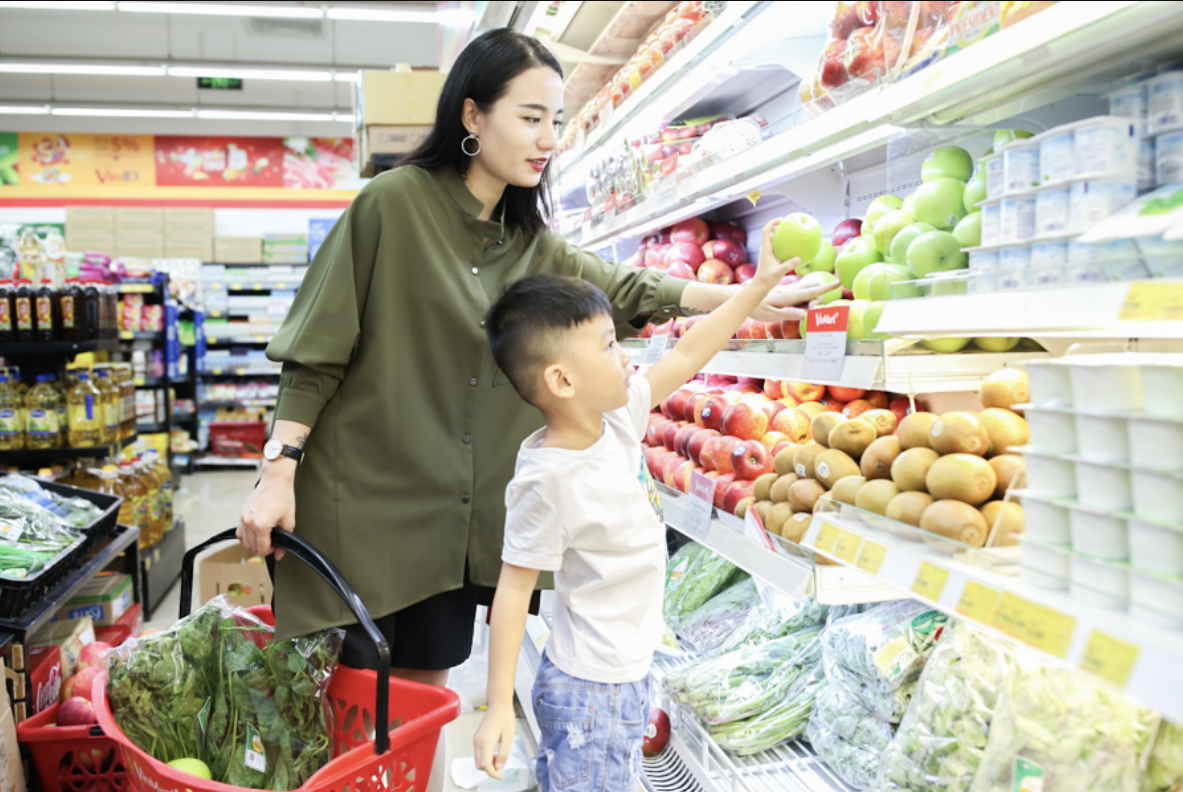
The Grocery Store
This is my favorite math classroom. The variety is endless, the stakes are low, and there's always a 'right answer' we can check immediately.
- •'We need 6 apples. There are 4 in the bag. How many more do we need?' (Simple subtraction)
- •'Apples are $1.29 per pound. We have 2 pounds. How much?' (Multiplication with decimals)
- •'This box has 12 granola bars for $4.80. That's how much per bar?' (Division)
- •'Our budget for snacks is $15. We've got $11.50 in the cart. How much left?' (Subtraction, money)
- •'Which is cheaper: 24 oz for $3.99 or 32 oz for $4.99?' (Unit rate comparison)
I never announce 'let's do math.' I just think aloud: 'Hmm, I'm trying to figure out if this is a good deal...' and often one of my kids will chime in with the calculation. They feel clever, not tested.
In the Kitchen
Cooking and baking are fraction goldmines. My kids learned fractions not from worksheets but from making cookies.
- •'The recipe needs 2 cups of flour. We're making double. How much?' (Multiplication)
- •'We need 3/4 cup of sugar. This scoop is 1/4 cup. How many scoops?' (Fraction reasoning)
- •'Cut the pizza into 8 equal slices. There are 4 of us. How many each?' (Division)
- •'Set the timer for 25 minutes. What time will it ring?' (Time addition)
- •'The recipe makes 24 cookies. If we eat 3 now, how many left for tomorrow?' (Subtraction)
When my daughter measures 3/4 cup by filling a 1/4 cup three times, she's understanding fractions in a way no diagram can replicate. The tactile experience creates lasting neural pathways.
In the Car
Car time is otherwise dead time. We've turned it into spontaneous math moments.
- •'We're driving 60 miles. At 30 mph, how long will it take?' (Division, time)
- •'The speed limit is 45. We're going 52. How much over?' (Subtraction)
- •'Count the red cars vs. blue cars for the next mile—who wins?' (Data collection)
- •'That sign says 28 miles to Grandma's. At 70 mph, about how long?' (Estimation)
- •'License plate math: add all the numbers on that plate.' (Mental addition)
- •'We left at 2:15 and it's a 45-minute drive. What time do we arrive?' (Time)
At Home
Even routine household moments become practice:
- •'Help me measure this wall for the new bookshelf. We need feet AND inches.' (Measurement)
- •'Sort these coins and tell me the total.' (Money, addition)
- •'We need to leave at 3:15. It takes 20 minutes to get ready. What time should we start?' (Time subtraction)
- •'How many days until your birthday?' (Calendar math)
- •'If you save $3 per week, how many weeks until you have $24 for that toy?' (Division, planning)
- •'We're having 12 guests. If each person eats 2 pieces of cake, how many pieces do we need?' (Multiplication)
The key: Ask questions casually. No 'this is a math problem' energy. Just conversation. If they answer, great. If not, think aloud yourself and let them overhear.
The Rules I Follow
Stealth math only works if it stays stealthy. The moment kids feel tested, the resistance appears. Here are my rules:
- •Never force an answer. If they don't engage, I answer my own question out loud and move on.
- •Accept any attempt. Even wrong answers get 'Hmm, interesting—let's check' not 'No, that's wrong.'
- •Keep it quick. One or two questions, then drop it. Don't turn shopping into a math test.
- •Let some wrong answers slide. Not every moment needs to be a teaching moment.
- •Match their mood. If they're hungry or tired or cranky, skip the math talk.
- •Never say 'This is good practice!' That blows the cover.
Age-Appropriate Questions
I adjust complexity based on age. Here's roughly what works:
- •Ages 4-5: Counting objects, more vs. less, simple addition within 10
- •Ages 6-7: Adding and subtracting within 20, skip counting, basic time telling
- •Ages 8-9: Multiplication, simple fractions, money with decimals, measurement
- •Ages 10+: Percentages, division with remainders, multi-step problems, unit rates
What This Has Done for My Kids
After years of embedding math into daily life, I've noticed real differences in my kids:
- •They see math as useful, not just school stuff. They use it voluntarily.
- •They have strong estimation skills—they know when an answer 'feels wrong' before calculating.
- •They're comfortable with numbers in any context, not just worksheets.
- •They don't have math anxiety because math was never presented as something to fear.
- •Their formal math at school is easier because they have real-world hooks for abstract concepts.
The Limits of Everyday Math
I need to be clear: everyday math supplements formal practice—it doesn't replace it. Casual conversations build number sense and positive associations, but children still need structured practice to build automaticity with facts and procedures. The ideal combination is both: stealth math for engagement and meaning, structured practice for skill-building.
Getting Started
If you're not used to weaving math into conversation, start small:
- •Pick one context (grocery store, cooking, or car rides) and focus there first.
- •Start with thinking aloud rather than direct questions. 'I wonder how much change we'll get...'
- •Keep expectations low—one math moment per outing is plenty.
- •Notice what your child naturally gravitates toward and build on that.
- •Don't expect engagement every time. Some days they'll bite, some days they won't.
Over time, it becomes second nature. You'll start seeing math opportunities everywhere—and your kids will start chiming in without prompting.
Combine your everyday math conversations with structured skill-building. Sorokid makes daily practice feel like play—the perfect complement to real-world math moments.
Start Free Trial