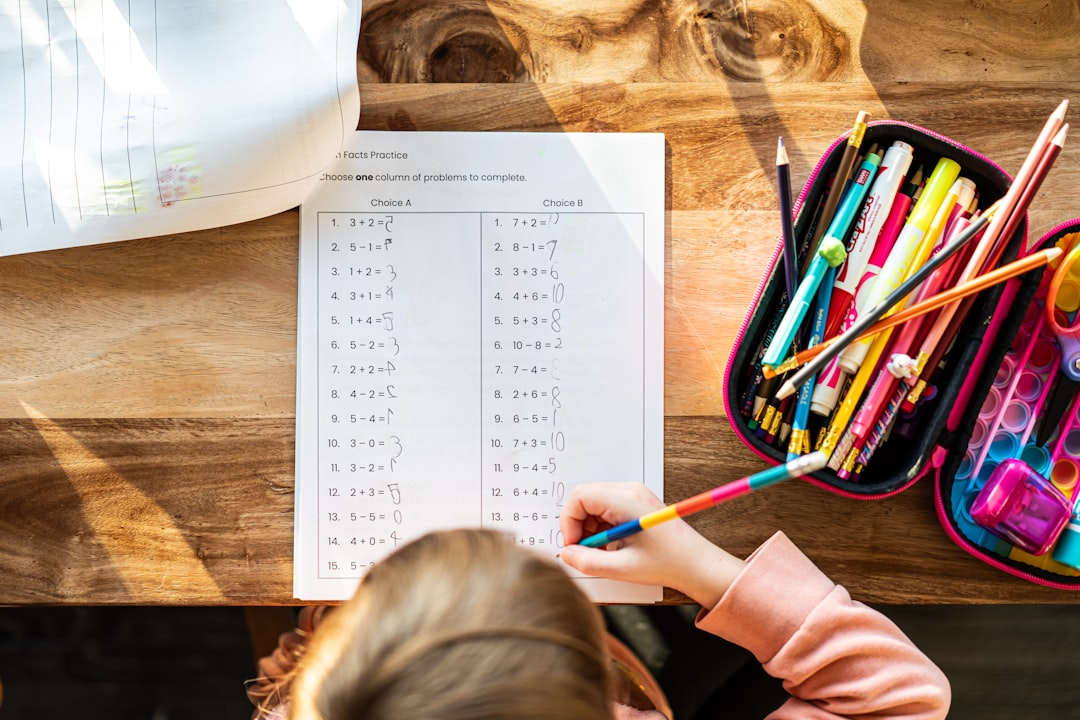
How I Got My Kids to Practice Math Every Day Without Reminders or Rewards
After years of daily negotiations and forgotten practice, I finally cracked the code. Here's the habit system that made math practice automatic in our house.
'Did you do your math today?' I asked my daughter for the fourth time. 'I'll do it later,' she said, not looking up from her book. Later never came. Or when it did, it was bedtime, she was tired, and we both ended up frustrated. This scene replayed daily in our house for two years. I'd remind, she'd forget or delay, I'd remind again, she'd resist, I'd lose patience. It was exhausting. I'm a productivity coach. I help adults build habits for a living. And I couldn't get my own kids to practice math consistently. The irony kept me up at night. But eventually, professional frustration pushed me to apply what I knew about adult habit formation to my children. What happened surprised me: within two months, all three of my kids were practicing math daily without a single reminder. Not because they suddenly loved math. Because it stopped requiring a decision.
Why Motivation Fails
Motivation is unreliable. It fluctuates with mood, energy, weather, social dynamics—factors completely outside our control. Some days your child is excited about math. Most days they're not. Relying on motivation means constant negotiation, daily persuasion, and inevitable resistance.
Habits are different. Habits are automatic. You don't decide to brush your teeth each morning—you just do it. The decision was made once, long ago, and now it runs on autopilot. Math practice can work the same way. Not today, not next week, but with the right system over 2-3 months.
The goal isn't to make your child want to practice math. The goal is to make practicing math so automatic that wanting becomes irrelevant. We don't 'want' to brush our teeth—we just do it.
The Habit Formula That Works
Every habit has three components: a cue (trigger), a routine (the behavior), and a reward. Get all three right, and the habit forms. Miss one, and it doesn't stick. Here's how I applied each:
The Cue: Attachment Anchoring
The biggest mistake I made for two years: math practice was a floating event. 'Do it sometime today' meant it never happened. The fix: attach math practice to something that already happens reliably every day. For my kids, it became 'right after breakfast, before getting dressed for school.' Breakfast already happens automatically. Now math does too.
Other anchor points that work for families:
- •After snack, before screen time (afternoon practice)
- •After dinner, before dessert (evening practice)
- •Same time as parent's coffee routine (modeling)
- •Immediately after waking up (morning birds)
- •Right after arriving home (transition ritual)
The key: choose an anchor that happens every single day, without exception. Weekend routines that differ from weekday routines weaken habit formation.
The Routine: Friction Elimination
Every bit of friction—every decision point—is an opportunity for the habit to fail. I eliminated all of them:
- •Device charged and in the same spot every day (no 'where's the tablet?')
- •App already open to the practice screen (no navigation)
- •Same location, same chair, same setup (environmental cue)
- •Same duration—exactly 10 minutes, no more (predictability)
- •App chooses what to practice (no decision fatigue)
The routine should be so seamless that starting requires zero thought. If there's friction anywhere, that's where the habit breaks.
The Reward: Immediate Positive Consequence
The brain needs a reward to cement the habit loop. This is where most parents go wrong—either no reward (practice feels punishing) or rewards used as bribes ('IF you practice, THEN you get...') which creates transactional resistance.
What works instead:
- •Natural sequence reward: Screen time, play time comes AFTER practice—not as payment for practice, but as the natural order of the day
- •Social reward: High-five, 'Nice job,' genuine acknowledgment (not over-the-top praise)
- •Intrinsic reward: Progress visible in the app—streaks, levels, visual growth
- •Physical marker: Sticker on a calendar, visible chain of completion
Frame it as sequence, not transaction. Not 'If you do math, you can have screen time' but 'In our house, we do math, then screen time. That's just how we do things.'
The 21-Day Myth
You've probably heard it takes 21 days to form a habit. This is wrong. Research shows behaviors take an average of 66 days to become truly automatic—and complex behaviors can take even longer. Plan for 2-3 months of intentional, deliberate consistency before the habit runs on its own.
During this formation period, you'll do the remembering. You'll ensure the cue happens. You'll eliminate friction. After 2-3 months, the habit takes over. Then you can step back.
When Habits Break (And How to Recover)
Life disrupts habits. Vacations, illness, schedule changes—these will happen. The key is how you respond:
- •Vacation: Decide in advance—either maintain the habit (even minimally) or accept a complete break. No half-measures. If breaking, restart day one when home—immediately, not 'tomorrow.'
- •Sick days: Skip when genuinely sick, resume the next healthy day without guilt or discussion. Don't make illness a habit-breaking exception that expands.
- •Missed a day: The critical rule—never miss twice. One miss doesn't break a habit; two misses start a new pattern. Treat the second day as non-negotiable.
- •Schedule changes: Find a new anchor point immediately. Don't let practice 'float' while you figure it out. Floating habits die.
- •Child refuses: Make it ridiculously small (2 minutes). Completion matters more than duration. Success beats struggle.
What My House Looks Like Now
After two months of deliberate habit building, here's what happened: My oldest finishes breakfast, walks to her spot, picks up the tablet, and practices math. No reminders. No negotiation. She just... does it. Like brushing teeth. It's not exciting. It's not dreaded. It's just what happens.
My middle child actually gets annoyed if something disrupts the routine. 'But I haven't done my math yet!' she said when we had to leave early one morning. The habit had become part of her identity—she was someone who does math daily, and skipping felt wrong.
My youngest, five years old, sees his sisters practice and asks for his turn. He's building the habit by modeling before we've even pushed it intentionally.
The Identity Shift
This is the real magic of habits: they create identity. At first, you're forcing behavior. But after enough repetition, the behavior becomes 'who you are.' My kids don't practice math because they're told to. They practice because they're people who practice math. That's a profound shift.
This identity extends beyond math. Kids who build one consistent habit learn they CAN build habits. That meta-skill—the ability to make behaviors automatic—serves them forever.
For Parents Starting Out
If daily math practice feels impossible in your house right now, here's what I'd say:
- •Choose one anchor point that happens every single day, including weekends
- •Start smaller than you think necessary—5 minutes is better than 15 if it means consistency
- •Eliminate every possible friction point—setup should require zero decisions
- •Don't use rewards as bribes; use them as natural consequences in a sequence
- •Commit to 2-3 months of YOU doing the remembering before expecting automaticity
- •Never miss twice. One miss is human; two misses is a pattern.
The first three weeks are the hardest. Resistance is normal. Push through with compassion but firmness. By week six, something shifts. By month three, you're done—the habit runs itself.
Ready to build a math habit that sticks? Sorokid's streak tracking and built-in rewards make consistency visible and progress motivating—helping daily practice become automatic.
Start Free Trial