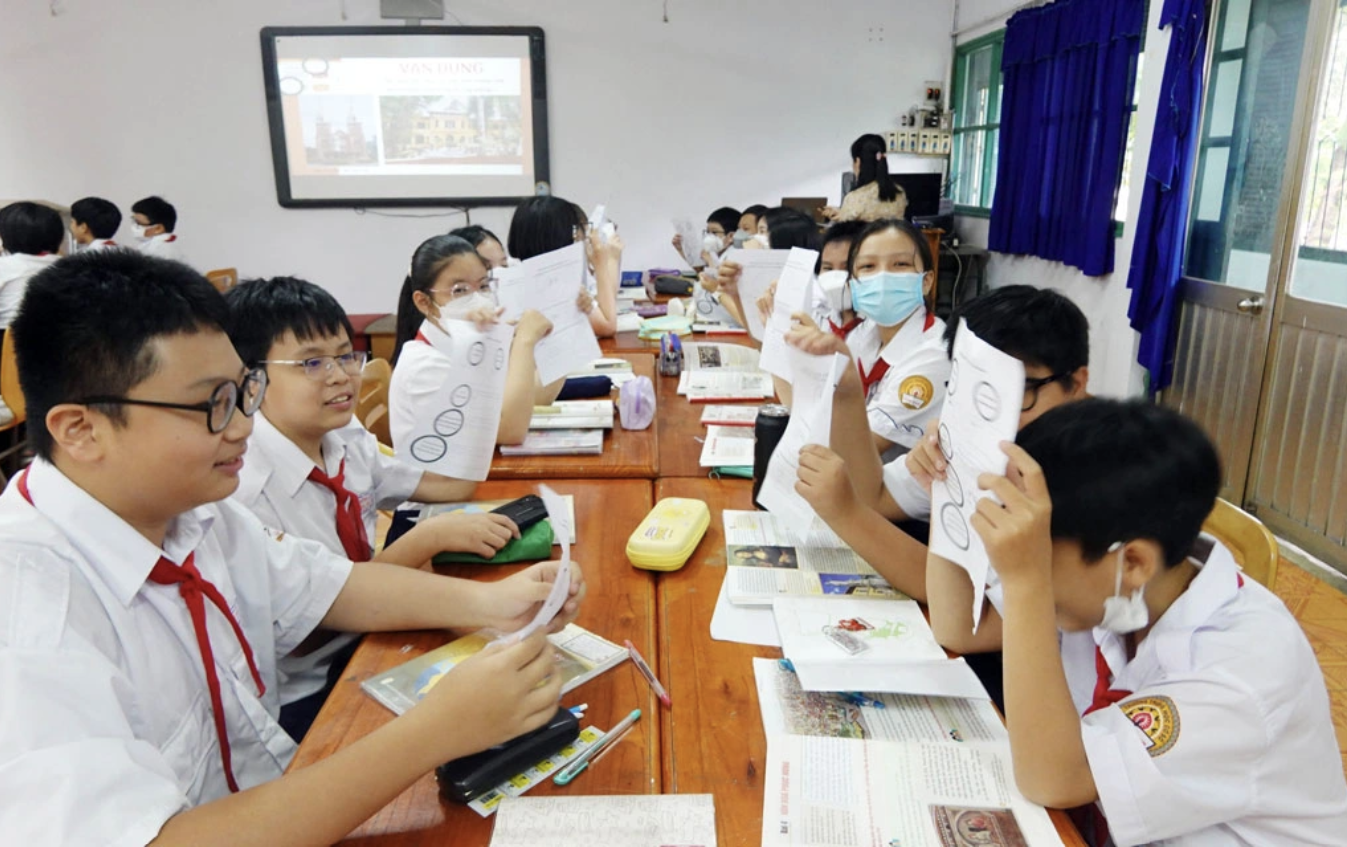
Teaching 45 Students at Once: How I Ensure No One Gets Left Behind
When you teach 45 students in one classroom, it's physically impossible to call on everyone. After years of watching quiet students become invisible, I developed strategies using digital tools that transformed my large-class teaching completely.
Forty-five pairs of eyes. Forty-five different learning needs. Forty-five potential questions, confusions, and 'aha' moments—happening simultaneously while I'm only one person with one voice. This is my reality every school day. For years, I accepted that some students would inevitably fade into the background, sitting safely in back rows, never called upon, gradually disengaging. Then I discovered a combination of simple digital tools and strategies that changed everything. Now, every student in my overcrowded classroom participates, nobody hides, and I actually enjoy teaching large classes. Here's exactly how I did it.
The Hidden Crisis in Large Classrooms
Before sharing solutions, let me describe the problem honestly. Teaching 45 students isn't just 'a bit harder' than teaching 20—it's a fundamentally different challenge that breaks traditional teaching methods.
The Math of Impossibility
A 40-minute lesson. Subtract 5 minutes for settling in, 5 for transitions, 5 for instructions. That leaves 25 minutes of actual teaching. If I spend 30 seconds on each student—which barely allows a meaningful exchange—I can reach exactly 50 students in 25 minutes. With 45 students, I might just manage everyone... if nothing goes wrong, no questions need extended answers, and every student responds instantly.
In reality? I reached maybe 10-15 students per lesson. The same 10-15 students—the ones who sat in front, raised hands eagerly, or caught my attention by misbehaving. The rest sat silently, lesson after lesson, year after year.
| Student Type | Percentage | Participation Rate | Learning Outcome |
|---|---|---|---|
| Active front-row students | ~15% | Called 3-4 times per lesson | Strong engagement, good progress |
| Middle-section volunteers | ~25% | Called 1-2 times per lesson | Moderate engagement |
| Passive but present students | ~35% | Called once per week or less | Minimal engagement, falling behind |
| Invisible back-row students | ~25% | Called once per month or never | Disengaged, significant gaps |
Shocking realization: About 60% of my students were getting less than one meaningful interaction with me per week. They came to school every day, sat through my lessons, and I barely knew they existed.
Why Traditional Solutions Failed
Failed Solution 1: Calling on Everyone Systematically
I tried going row by row, name by name. Problems: Students knew when they'd be called and only prepared for that moment. The process was slow and mechanical. Students who answered early relaxed; those waiting grew anxious.
Failed Solution 2: Volunteer-Based Participation
I relied on raised hands. Problems: Same 8-10 students dominated every discussion. Shy students never volunteered. Struggling students hid, avoiding exposure of their confusion.
Failed Solution 3: Random Cold Calling from Memory
I tried randomly calling names from memory. Problems: My brain naturally gravitated toward students I knew (the active ones). I unconsciously avoided students who previously gave wrong answers. Some students were never randomly 'remembered.'
The Digital Tool Revolution
The breakthrough came when I discovered that simple digital tools could remove my unconscious biases and create true randomness. These weren't expensive platforms or complex systems—just clever applications of basic randomization.
Tool 1: Random Name Picker
I entered all 45 student names into a digital random picker. When asking questions, instead of scanning the room and (unconsciously) choosing familiar faces, I spin the picker. The wheel spins, names blur past, and a student is selected with zero bias.
The psychological impact was immediate and dramatic:
- •Every student stays alert—anyone might be next
- •Shy students can't hide—their turn will come
- •No student feels 'picked on'—it's visibly random
- •Students actually enjoy it—the spinning wheel creates anticipation
- •I can't unconsciously favor anyone—the tool removes my bias
Tool 2: Group Formation Randomizer
Group work in a 45-student class used to be chaos. Students took 10 minutes to form groups, always chose the same friends, and cliques dominated discussions. Now I use a digital group randomizer that instantly creates balanced groups with one click.
Benefits:
- •Time saved—Groups form in 30 seconds instead of 10 minutes
- •Social mixing—Students work with different classmates each time
- •No friend cliques—Random grouping breaks up social hierarchies
- •Fair distribution—Strong and weak students are distributed evenly
- •New perspectives—Students hear from classmates they'd never choose
Tool 3: Digital Poll/Quiz Systems
Instead of asking one question and getting one student's answer, I pose questions that all 45 students answer simultaneously via quick hand signals or simple voting systems. Now I know what the whole class thinks, not just the loud minority.
Even without technology, you can do whole-class responses: 'Thumbs up if you got 7, thumbs sideways if you got something else.' Suddenly you see 45 responses instead of one, and you know exactly who needs help.
Implementing the New System: Week by Week
Week 1: Introducing Random Selection
I explained to students why I was changing. 'I realized some of you haven't been called in weeks. That's not fair to you—you deserve attention too. From now on, a wheel will decide who answers, so everyone has equal chances.' Students accepted this immediately. Some quiet students actually looked relieved—they'd finally be forced out of hiding.
Week 2: Addressing 'I Don't Know'
New problem: When random selection hit unprepared students, they said 'I don't know' to escape quickly. My solution: I allowed 'lifelines'—students could ask a classmate for help, but they had to repeat the correct answer themselves. This maintained participation while reducing shame.
Week 3: Building Engagement Momentum
By week three, something magical happened. Students started preparing better because they knew selection was truly random—no hiding in the back row anymore. Class engagement scores (based on my informal tracking) rose from ~40% to ~80%. The previously invisible students were participating.
Week 4 and Beyond: Refinement
I added features: tracking which students had been selected (to ensure even distribution), allowing 'voluntary spin' where eager students could request a chance, and using the tools for positive moments (random selection for privileges, not just questions).
| Metric | Before Tools | After Tools | Change |
|---|---|---|---|
| Students called per lesson | 10-15 | 20-30 | +100% |
| Students never called per month | ~10 | 0 | -100% |
| Average attention level (observed) | ~50% | ~85% | +70% |
| Group formation time | 8-10 minutes | 30 seconds | -95% |
| Students 'hiding' in back rows | ~10 | ~2 | -80% |
Beyond Randomization: Complete Large-Class Strategies
Strategy 1: Think-Pair-Share Modified for 45 Students
Traditional think-pair-share works for small classes. For 45 students, I modified it: Think (individual, 30 seconds) → Pair (discuss with seat neighbor, 1 minute) → Random Share (wheel selects one pair to share). Every student thinks and discusses; random selection ensures any pair might be spotlighted.
Strategy 2: Exit Ticket Systems
At lesson end, every student writes a quick response on paper or their notebook: 'One thing you learned' or 'One question you still have.' I collect them. Even if I can't respond to all 45 individually, I scan for patterns and address common issues next lesson. Every student has expressed themselves.
Strategy 3: Structured Peer Teaching
I can't reach all 45 students individually. But if I organize students into 9 groups of 5, and assign one 'leader' per group, suddenly I have 9 mini-teachers helping me. Leaders change weekly (randomly selected), so everyone experiences both roles.
Strategy 4: Physical Positioning
I stopped teaching from the front only. I walk the room constantly during lessons, positioning myself in different sections. Back-row students suddenly become front-row when I teach from behind them. Nobody has a 'safe' hiding spot because my position is unpredictable.
Common Concerns and Real Answers
'Doesn't random calling embarrass struggling students?'
Initially, I worried about this. But I learned that perpetual hiding is worse than occasional struggle. Struggling students who were never called never got help—their difficulties remained invisible. Random calling with 'lifeline' options exposes struggles early, allowing intervention before problems compound. Plus, when everyone faces random selection, there's no shame—it's not personal.
'What about students with anxiety?'
I accommodate genuinely anxious students with alternatives: they can write responses instead of speaking, or receive advance notice before their turn. But I found that most 'anxiety' was actually avoidance habit—students who seemed anxious became comfortable once random calling was normal and they saw classmates handle it fine.
'Do I need expensive technology?'
Absolutely not. Free random picker websites work fine. Even a physical spinner or numbered cards achieve the same effect. The key is genuine randomness and consistency, not fancy technology.
The Transformation in My Teaching
Looking back at my old teaching—when 60% of students sat through lessons virtually unnoticed—I'm embarrassed. I thought I was doing my best, but I was systematically ignoring the majority of my classroom. The tools and strategies described here didn't make my job easier (large classes are still exhausting), but they made my teaching fairer and more effective.
The quiet girl who sat in the back corner for two years without speaking in class? She now participates regularly, because the wheel doesn't care about her shyness. The struggling student who perfected the art of looking busy while learning nothing? He's exposed now—which means he gets help.
The biggest lesson: Large classes force us to systematize equity. We can't rely on intuition and attention because our human brains have bias limits. Tools that remove bias aren't replacing teacher judgment—they're protecting students from our blind spots.
FAQ: Questions from Fellow Large-Class Teachers
How do you track which students have been called?
Some digital pickers have a 'don't repeat until all selected' feature. Alternatively, I keep a simple checklist and mark names as they're called, resetting weekly. The goal isn't perfect tracking—just ensuring nobody goes weeks without participation.
What if the wheel keeps selecting the same student?
True randomness can cluster selections. If someone is selected twice consecutively, I say 'Lucky spin! But let's give someone else a turn' and spin again. The tool serves my purpose, not vice versa.
How do students react to random selection initially?
Reactions vary: active students sometimes resist losing 'their' speaking time. Quiet students look nervous but often relieved. Most students quickly accept it as fair. The key is explaining your reasoning—students understand when you say 'I want everyone to have equal chances.'
Looking for classroom tools that help engage every student? Sorokid Toolbox offers free random pickers, group generators, and interactive games designed for teachers managing large classes.
Explore Teacher Tools