Flash Anzan: The 5-Minute Daily Brain Warmup That Transformed My Students' Mental Math
I started using Flash Anzan as a 5-minute filler. Three months later, my class's mental math had improved dramatically. Here's how to turn a simple brain exercise into the activity students beg for.
Every morning, my class has a special ritual: 5 minutes of Flash Anzan. I originally started it just to wake students up and fill the awkward minutes before first period. But three months later, something unexpected happened—my students' mental math improved dramatically, and they actually started looking FORWARD to this activity. Here's how a simple brain warmup transformed from 'filler time' into the most anticipated part of the day.
What Is Flash Anzan?
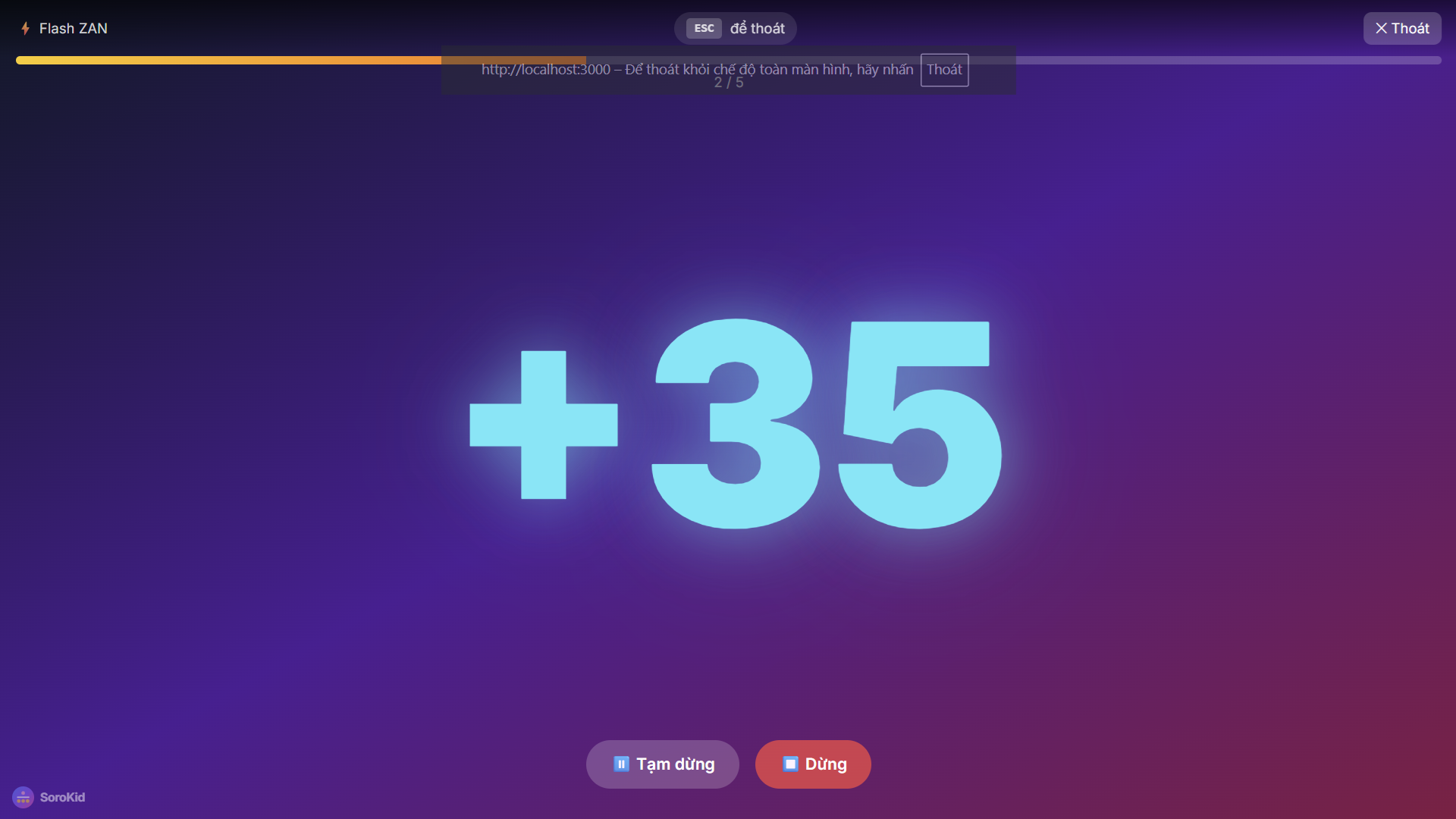
Flash Anzan is a mental math training method where numbers flash rapidly on a screen and students calculate the sum mentally. Popular in Japan, Korea, and across Asia, it's essentially a brain workout disguised as a game.
Unlike traditional mental math where you might write on paper, Flash Anzan requires:
- •Intense focus: Numbers disappear in milliseconds—blink and you miss them
- •Working memory: Holding running totals while new numbers appear
- •Pure mental calculation: No pencils, no scratch work, just brain power
- •Quick reflexes: Processing speed increases with practice
The method improves calculation speed, working memory capacity, and sustained attention—skills that transfer far beyond math class.
Why I Started (Accidentally)
Honestly? I wasn't trying to improve mental math. I had a problem: my first period students arrived at different times, and I needed something to occupy early arrivers without creating chaos for latecomers.
I stumbled across Flash Anzan videos and thought: 'This could work. Self-paced, quiet, no setup required.' I projected it on the board and told students to try silently calculating along.
The unexpected result: Within a week, students were asking if we could 'do the number game' every day. Within a month, they were begging to try harder levels. I had accidentally created intrinsic motivation for mental math practice.
How I Structure the 5 Minutes
Minutes 1-2: Easy Warmup
Start with slow speeds and few numbers (3-4 single digits). Everyone can succeed. This builds confidence and gets brains firing.
Minutes 3-4: Challenge Zone
Increase speed or number count. This is where growth happens—students stretch just beyond their comfort zone.
Minute 5: 'Boss Level'
One final challenge at higher difficulty. Not everyone will get it—and that's the point. It shows there's always room to grow.
The Progression System That Works
- •Week 1-2: 3 single-digit numbers, slow speed (1 second per number)
- •Week 3-4: 4 numbers, medium speed
- •Month 2: 5 numbers, faster speed, introduce two-digit numbers
- •Month 3: Mixed difficulties, students track personal bests
- •Month 4+: Add variations: subtraction mixed in, longer sequences
Making It Competitive (The Right Way)
Competition motivates—but handled wrong, it discourages weaker students. Here's my approach:
- •Personal bests, not rankings: Students compete against their own records
- •Celebrate improvement: 'Sarah moved up a level!' gets applause
- •Mixed ability groups: Stronger students help weaker ones, everyone advances together
- •Optional harder levels: Challenge-seekers can try boss levels; others don't have to
Results After Three Months
I didn't expect much. I was just filling time. But here's what happened:
- •Mental math speed: Class average improved 40% on timed tests
- •Accuracy: Careless errors dropped significantly
- •Focus: Students could sustain attention longer on other tasks
- •Confidence: Students who 'hated math' started saying they were 'good at the number game'
The most surprising outcome: Parents reported kids practicing Flash Anzan at home for fun. One parent said, 'He asks to do it before bed. I've never seen him voluntarily practice math.'
Why Flash Anzan Works (The Science)
Working Memory Training
Holding numbers while calculating trains working memory—the mental 'scratch pad' used for all learning. Stronger working memory = better math AND reading comprehension.
Automaticity Building
Repeated rapid calculation makes number combinations automatic. Students stop 'calculating' 7+8 and just KNOW it's 15.
Flow State Entry
The game-like challenge, immediate feedback, and incremental difficulty create flow states—deep focus that feels effortless. This is why students find it fun rather than stressful.
Getting Started: Tools and Resources
- •Sorokid app: Built-in Flash Anzan with adjustable difficulty
- •YouTube videos: Search 'Flash Anzan' for free practice videos
- •Web tools: Several free Flash Anzan generators online
- •DIY: PowerPoint slides with timed number animations
Common Mistakes to Avoid
- •Starting too hard: Frustration kills motivation. Begin easier than you think necessary.
- •Forcing participation: Some students need time to observe before joining. Let them.
- •Public shaming of wrong answers: Never. Mistakes are private; successes are celebrated.
- •Skipping the easy warmup: Even advanced students need warmup to activate their brains.
- •Making it too long: 5 minutes is optimal. More becomes tedious; less doesn't build habit.
FAQ from Teachers Who've Tried This
What if students get frustrated by harder levels?
Emphasize personal improvement over absolute performance. 'You couldn't do 4 numbers last week. Now you can!' Also, always start with an easy level where everyone succeeds.
How do I assess individual progress?
Have students track their own 'level' in a simple chart. They see their progression over time. You can spot-check with individual challenges occasionally.
Does this work for younger children?
Yes! Start with just 2-3 very small numbers at slow speeds. Even kindergartners can do basic Flash Anzan. Adjust expectations for age.
Transform your morning routine with Flash Anzan. Sorokid includes adjustable Flash Anzan with progress tracking—watch your students' mental math transform in weeks, not months.
Start Free Trial