Why Soroban Works So Well for Elementary Kids: A Teacher's Perspective After 15 Years
After teaching 4th grade for 15 years and seeing hundreds of math struggles, I finally understand why Soroban clicks for elementary-aged children when traditional methods often don't.
In 15 years of teaching 4th grade, I've watched roughly 400 students struggle with math in remarkably similar ways. They memorize facts without understanding. They freeze when problems look unfamiliar. They develop anxiety that blocks learning. Three years ago, a parent introduced me to Soroban, and I've spent considerable time since understanding WHY it works so well for elementary-aged children. The answer lies in developmental psychology, cognitive science, and how young brains naturally process information. Let me share what I've learned.
The Problem with Traditional Math Instruction
First, let me explain what I see going wrong in traditional math education—not to criticize my colleagues, but to understand what Soroban addresses.
The Memorization Trap
We ask kids to memorize facts before they understand them. '7 + 8 = 15' becomes a verbal fact stored alongside song lyrics and phone numbers. It's retrievable but not understood.
This works... until it doesn't. When a child who memorized '7 + 8 = 15' faces '17 + 28', they often freeze. They can't extend the pattern because they never understood it.
The Abstraction Gap
Numbers are abstract symbols. When we write '47,' there's nothing inherently '47' about it—it's just marks on paper representing a quantity. Young children are concrete thinkers. Asking them to manipulate abstract symbols is developmentally challenging.
The Anxiety Spiral
When memorization fails and abstraction confuses, kids start avoiding math. Avoidance leads to gaps. Gaps lead to more failure. Failure leads to 'I'm bad at math.' I've seen this spiral in countless students.
The traditional approach often asks children to do something developmentally challenging (manipulate abstract symbols) before they're ready, then labels them 'bad at math' when they struggle.
What Elementary Kids Actually Need
Developmental psychology tells us what children ages 5-10 need for optimal math learning:
- •Concrete before abstract: Physical manipulation before mental manipulation
- •Visual representations: Pictures and models alongside numbers
- •Hands-on learning: Tactile engagement strengthens understanding
- •Pattern recognition: Finding relationships rather than memorizing isolated facts
- •Success experiences: Confidence built through achievable challenges
- •Repetition with variety: Same concepts, different presentations
When I learned about Soroban's methodology, I realized it aligns almost perfectly with these developmental needs.
Why Soroban Works: Reason 1 – Concrete Representation
Soroban makes numbers physical. The number 47 isn't just symbols—it's a specific configuration of beads: 4 columns of tens-place beads, then 7 in the ones place.
When children move beads to add 28, they're physically combining quantities. They can SEE the regrouping happen. They can FEEL the exchange from ones to tens.
This concrete experience builds understanding that pure symbol manipulation never provides.
Why Soroban Works: Reason 2 – Visual Processing
Here's something fascinating: Elementary children are in a 'visual prime' developmentally. Their visual processing systems are highly active and malleable.
Soroban leverages this. Numbers become images—specific patterns of beads. When a child thinks '47,' they don't retrieve a verbal fact; they 'see' the bead configuration.
This visual encoding is:
- •More stable: Visual memories are often stronger than verbal ones
- •More flexible: Images can be mentally manipulated more easily than words
- •More connected: Seeing 47 as beads shows its relationship to 37, 57, 46, 48...
- •More natural: Young children think in pictures more than words
Why Soroban Works: Reason 3 – Multi-Sensory Learning
When a child uses a soroban, they engage:
- •Visual: Seeing bead positions
- •Tactile: Feeling beads move
- •Auditory: Hearing the click of beads
- •Motor: Moving fingers in specific patterns
- •Spatial: Understanding positions and relationships
Multiple sensory channels reinforce the same information. Each channel creates memory pathways that support the others. This is why physical Soroban practice is so effective for young learners.
Why Soroban Works: Reason 4 – Understanding Complements
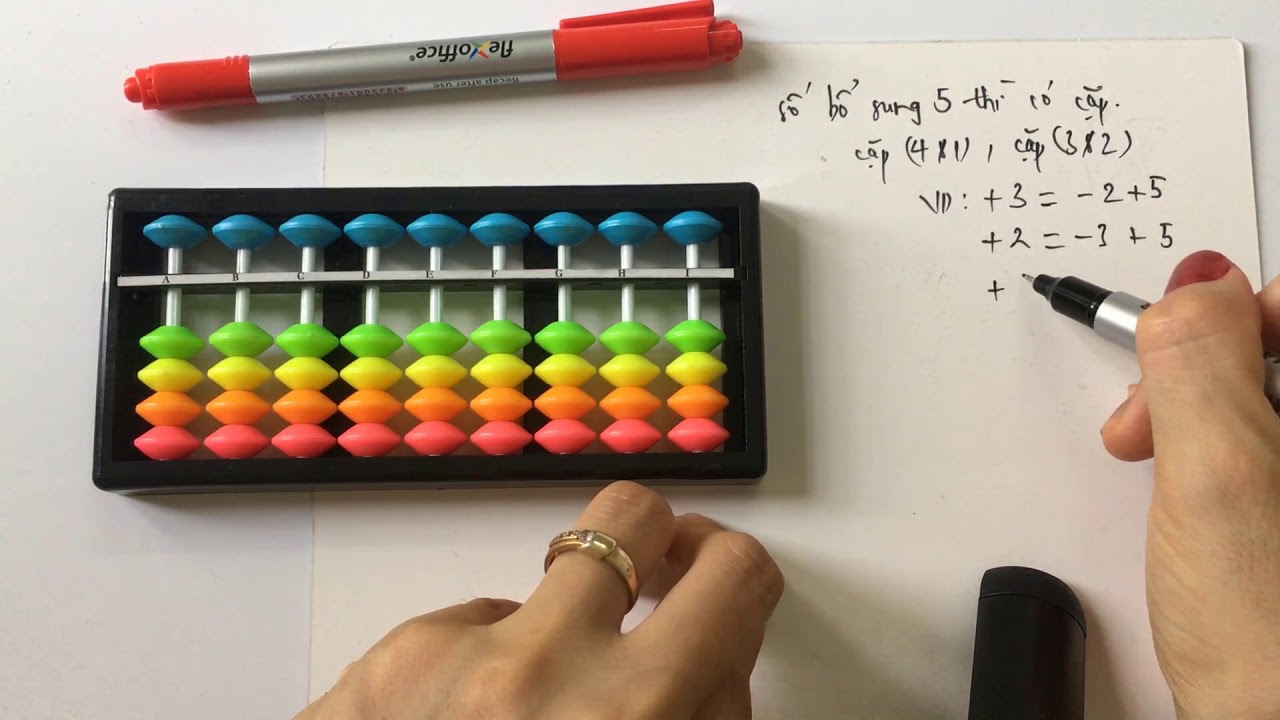
Soroban teaches 'complements'—pairs of numbers that combine to make 5 or 10. This isn't just a Soroban technique; it's the foundation of number sense.
When a child learns that 7 is '5 + 2' and that to add 8 you 'add 10, subtract 2,' they understand number relationships. This understanding transfers directly to school math, mental math, and everyday calculations.
I've seen students who learned complements through Soroban develop number sense that their worksheet-trained peers lack.
Why Soroban Works: Reason 5 – The Visualization Bridge
This is perhaps the most remarkable aspect. After sufficient physical practice, children develop 'mental soroban'—they can visualize the beads and manipulate them internally.
This mental abacus becomes a powerful tool for mental math. Unlike verbal mental math ('carry the one...'), visual mental math is faster, more accurate, and has higher capacity.
Elementary school is the optimal window for developing this visualization because:
- •Visual processing is highly plastic at this age
- •Children naturally think in images
- •The brain is building mathematical pathways that will remain for life
- •There's time for the 1-2 years needed to develop strong visualization
Brain imaging studies show that Soroban-trained children process math differently—using visuospatial brain regions rather than verbal ones. This different neural pathway is established during the elementary years and persists into adulthood.
Why Soroban Works: Reason 6 – Building Confidence
Soroban has a carefully structured progression. Children start with simple representation (showing numbers on the abacus), then simple operations (single-digit addition), gradually building complexity.
This structure means children experience SUCCESS before facing challenges. Each level builds on mastered skills. Failure is minimized; progress is visible and celebrated.
For children who've developed math anxiety from traditional instruction, this structured success is transformative. I've watched 'I hate math' students become 'I'm good at this' students through Soroban's confidence-building progression.
Why Soroban Works: Reason 7 – Focus and Discipline
Soroban practice requires attention. You can't move beads correctly while distracted. This natural attention requirement builds focus skills that elementary children are actively developing.
Unlike worksheets that can be done mindlessly (and often incorrectly), Soroban demands presence. 15 minutes of focused Soroban practice trains concentration in ways that transfer to other learning.
The Age Factor: Why Elementary Is Optimal
Soroban can be learned at any age, but elementary school (roughly ages 5-10) is optimal for several reasons:
Brain Plasticity
Young brains are more plastic—more capable of forming new neural pathways. The visualization skills that develop through Soroban are easier to establish in childhood than adulthood.
Mathematical Foundation Building
Elementary years are when mathematical foundations are established. Soroban provides a concrete foundation that supports all future math learning. Starting early means the foundation is in place before more complex math arrives.
Time for Development
Developing strong mental math through Soroban takes 1-2 years of consistent practice. Elementary children have this time. Starting at 6 or 7 means strong skills are established well before middle school math demands.
Natural Visual Thinking
Young children naturally think in pictures. Soroban's visual approach matches how their brains already work. Older students who've been trained in verbal/abstract math may find the visual approach less intuitive.
What I've Seen in My Classroom
Since learning about Soroban, I've recommended it to many parents. Here's what I've observed:
- •Visual learners thrive: Students who struggled with verbal/abstract methods often excel with Soroban
- •Confidence transforms: The 'I can't do math' kids become confident calculators
- •Mental math improves noticeably: Soroban students often become the fastest mental calculators
- •Understanding deepens: Kids who learn complements understand WHY math works
- •Anxiety decreases: Structured success experiences reduce math fear
- •Focus improves: The attention practice transfers to other subjects
Addressing Common Concerns
'Will it conflict with school math?'
No. Soroban builds number sense and calculation fluency that support school math. The complement system aligns with 'making ten' strategies many schools now teach. Students don't get confused—they get stronger.
'I don't know Soroban—how can I help my child?'
Modern apps like Sorokid are designed for independent learning. Children follow structured lessons with immediate feedback. Parents don't need Soroban expertise—they need to provide encouragement and consistent practice time.
'Is 15 minutes a day really enough?'
Yes. Consistency matters more than duration. Daily 15-minute practice over months creates compound benefits. In fact, shorter focused sessions are often more effective than longer distracted ones for elementary children.
'What if my child isn't 'mathy'?'
This is exactly why Soroban works. Children who struggle with traditional abstract math often thrive with visual, concrete approaches. Soroban is particularly effective for kids who've been told (or told themselves) they 'can't do math.'
How to Start
If you're considering Soroban for your elementary-aged child, here's my advice:
- •Start with a quality app: Structured progression matters. Sorokid provides the scaffolded learning elementary kids need.
- •Commit to consistency: 15 minutes daily, same time each day. The habit is as important as the practice.
- •Be patient: Real benefits emerge over months, not weeks. Trust the process.
- •Celebrate progress: Every level, every milestone. Build positive associations.
- •Don't force visualization: Let mental math develop naturally from physical practice.
- •Connect with school math: Point out when Soroban skills help with homework.
A Teacher's Honest Take
I've spent 15 years trying to help children succeed at math within the traditional system. I've seen what works and what doesn't.
Soroban isn't a magic solution. It requires consistent practice. It takes time. It won't fix every math problem.
But for elementary-aged children—especially those who've struggled with abstract approaches—Soroban offers something different. Something that matches how their brains naturally work. Something that builds understanding, not just memorization.
If I had discovered Soroban earlier in my teaching career, I believe I could have helped many more students. I'm sharing this now so other parents and teachers can give their children this opportunity during the optimal developmental window.
Elementary school is the perfect time to start Soroban. Your child's brain is primed for visual learning, concrete manipulation, and building mathematical foundations. The skills they develop now will serve them for life.
Your elementary-aged child is in the optimal window for developing visual math skills. See if Soroban's approach matches how their brain naturally works—try a free trial with no commitment.
Start Your Free Trial