The Complete Soroban Learning Path – From Zero to Mental Math
How long does it take to learn Soroban? Where should kids start? Here's the complete roadmap I followed with my child from beginner to mental calculation.
Parents often ask: How long does Soroban take? Where should we start? Here's the complete roadmap I followed with my son – from complete beginner to doing mental math.
Best Age to Start Soroban
| Age | Assessment | Notes |
|---|---|---|
| 4-5 years | Early | More play than study. Fine motor skills still developing. |
| 6-7 years | Ideal | Can focus 15-20 minutes. Learning numbers at school. |
| 8-10 years | Still great | Understands concepts faster. Can advance quickly. |
| 11+ years | Later start | Still works but needs more time to build reflexes. |
The "golden age" is 6-8 years old. But it's never too late. Even adults can learn Soroban.
The Complete Soroban Learning Path
Stage 1: Getting Familiar (1-2 months)
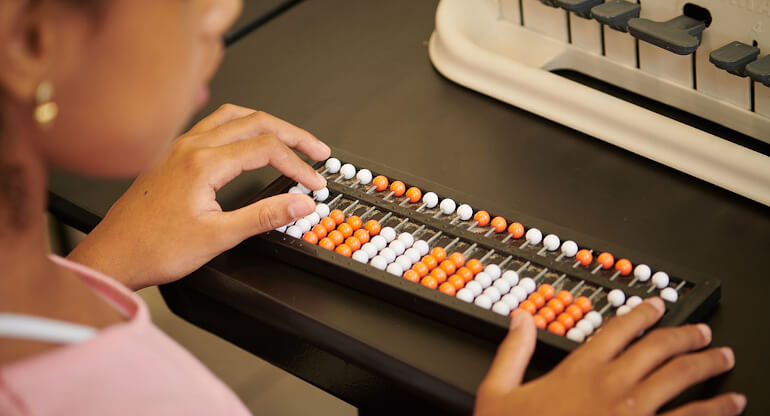
- •Abacus structure: the bar, heaven beads, earth beads
- •Proper grip and sitting posture
- •Representing numbers 0-9 on a single column
- •Representing tens and hundreds
Goal: Child is comfortable with the abacus and can represent any number.
Stage 2: Simple Addition & Subtraction (2-3 months)
- •Addition without carrying (1+2, 3+4)
- •Subtraction without borrowing (7-2, 9-5)
- •Practice with 1-2 digit numbers
Goal: Child can do simple calculations fluently on the abacus.
Stage 3: Friends of 5 & Friends of 10 (2-3 months)
- •Friends of 5: When you need more than 4 earth beads
- •Friends of 10: Carrying to the next column
- •These are the "secrets" that unlock faster calculation
Goal: Child understands and applies complement rules naturally.
Stage 4: Multi-digit Operations (3-4 months)
- •3-4 digit addition and subtraction
- •Multiple carries and borrows
- •Speed building with flash practice
Goal: Child handles complex calculations with speed and accuracy.
Stage 5: Mental Soroban - Anzan (6+ months)
- •Visualizing the abacus mentally
- •"Moving" imaginary beads
- •Flash Anzan training
- •Speed and accuracy challenges
Goal: Child calculates mentally without physical abacus – this is the ultimate skill.
Most kids reach basic mental math ability in 6-12 months. But like any skill, the more you practice, the faster you get.
How Long Does Each Stage Take?
With 15-20 minutes of daily practice:
- •3 months: Basic operations on abacus
- •6 months: Beginning mental math (Anzan)
- •12 months: Confident mental calculation with 2-3 digit numbers
- •2+ years: Advanced speed and competitions level
Every child is different. Some progress faster, some need more time. What matters is consistent practice, not racing through levels.
Ready to help your child build math confidence? Sorokid offers interactive lessons, games, and progress tracking designed for busy families.
Start Free Trial