We Both Ended Up Crying Over Math Homework: A Mother's Story of Breaking the Cycle
Every evening started with hope and ended with tears—mine as much as my daughter's. I thought I was helping her learn math. Instead, I was exhausting both of us. Here's how I finally broke the cycle.
8 PM. I'd just finished washing the dinner dishes. I sat down beside my daughter, opened her math workbook, and asked cheerfully, 'Okay, what's 7 plus 5?' She stared at the page. I waited. Asked again. Silence. I felt my patience beginning to crack. Thirty minutes later, she was crying. I was on the verge of tears myself. Another evening ending exactly like the last one. I kept telling myself I was helping my child learn math. But sitting alone at that kitchen table after she went to bed, I couldn't escape a terrible question: what exactly am I doing to my daughter?
The Groundhog Day of Homework Horror
Every evening followed the same script. I'd start with the best intentions. Tonight would be different. Tonight I'd stay calm. Tonight I wouldn't raise my voice. Then reality would set in. My daughter would sit there, staring at problems she'd solved correctly yesterday, claiming she had no idea how to do them. My explanations would get longer. My voice would get louder. Her responses would get quieter. Then the tears would come.
| Time | What Happened | My Internal State | My Daughter's State |
|---|---|---|---|
| 8:00 PM | Start homework, good spirits | Optimistic, patient | Hopeful but tense |
| 8:10 PM | First wrong answer, I explain | Still calm, helpful | Nodding, trying to understand |
| 8:20 PM | Same mistake again | Confusion, slight frustration | Getting nervous |
| 8:30 PM | Third identical mistake | Frustration building | Shutting down, getting quiet |
| 8:40 PM | Voice rising, explanations longer | Losing patience | Eyes getting red |
| 8:50 PM | Tears begin | Guilt mixing with frustration | Crying, feeling stupid |
| 9:00 PM | Session ends badly | Devastated, self-critical | Goes to bed upset |
The worst part? I knew the pattern. I could predict exactly how each evening would unfold. Yet I repeated it night after night, somehow expecting different results. In hindsight, the definition of madness.
If this sounds familiar—if you've ended homework sessions in tears (yours or your child's) and felt that crushing guilt afterward—you're not alone. More importantly, you're not a bad parent. You're a parent using an approach that doesn't work, and that can change.
The Specific Problem That Broke Me
It was a simple addition problem: 7 + 5. Not complicated. Not a trick question. Just 7 + 5. My first-grader had done dozens of these before. She should know this by now. She looked at the problem, looked at me, looked back at the problem. Nothing.
I explained. 'Count up from 7. 8, 9, 10, 11, 12. Seven plus five equals twelve.' She nodded. I gave her another: 6 + 4. She stared. I waited. She whispered '9?' I felt something inside me snap. Not anger exactly—despair. We'd been doing this for months. How could she not know this?
What I didn't understand then was that her brain was working exactly as a child's brain works under stress. She probably did know 7 + 5 in a calm classroom environment. But sitting next to her anxious, frustrated mother—whose disappointment she could feel radiating—her stress response activated. Her working memory reduced. Her cognitive resources diverted to survival mode. She literally couldn't access what she knew.
Understanding Why Our Approach Was Failing
After one particularly devastating evening—where my daughter asked through tears if I loved her even when she was 'bad at math'—I knew something had to fundamentally change. I started researching. What I learned transformed my understanding of why homework time had become so destructive.
The Stress-Learning Connection
When children feel stressed or threatened, their bodies release cortisol. This hormone impairs the hippocampus—the brain region responsible for learning and memory. The more stressed my daughter became during homework, the less she could learn or remember. My frustration, intended to motivate her, was chemically preventing her from succeeding.
The Pressure of Parental Presence
Children want their parents' approval more than almost anything. When I sat beside my daughter watching her every pencil stroke, she felt evaluated. Every hesitation felt like failure. Every mistake felt like disappointment. The pressure of my watching eyes—even with my best supportive smile—created anxiety that disrupted her thinking.
The Emotional Investment Trap
I cared deeply about my daughter's success—so deeply that I couldn't maintain perspective about individual homework problems. When she made mistakes, I didn't just see 'child learning'—I saw potential future struggles, worried about her academic trajectory, felt my own competence as a mother being questioned. This emotional intensity was impossible to hide, and she absorbed it.
- •Her stress triggered my stress, which increased her stress—a amplifying feedback loop
- •My explanations got longer and more complex as frustration grew, becoming harder to understand
- •My body language communicated disappointment even when my words didn't
- •The nightly pattern created anticipatory anxiety—she dreaded homework before it began
- •Each failed session reduced her confidence, making the next session harder
Critical insight: The harder I tried using my existing approach, the worse things got. My 'help' wasn't just unhelpful—it was actively harmful. The most loving thing I could do was stop doing what I was doing.
The Difficult Decision to Step Back
Deciding to stop sitting beside my daughter during homework was one of the hardest parenting decisions I've made. It felt like abandonment. Like giving up. Like admitting I'd failed as a mother. But I'd already failed—failed at creating a positive learning environment, failed at maintaining our relationship, failed at helping her actually learn. Continuing the same approach would only produce more failure.
I told my daughter: 'I've realized that sitting together for homework isn't working for us. You're going to do your homework in your room now. I'll be in the living room if you really need help. And I want you to know—I love you exactly the same whether you get every problem right or every problem wrong.'
She looked relieved. That told me everything I needed to know about how our sessions had felt from her perspective.
Creating a New System That Actually Works
Stepping back from direct involvement required building new structures. I couldn't just leave my six-year-old to figure everything out alone. But I needed to provide support differently.
Element 1: Independent Work Time
Homework happened in her room, at her small desk. I set a timer for 20 minutes. During that time, she worked independently. If she got stuck, she was allowed to skip problems and move on. No pressure to complete everything perfectly. The goal was genuine effort, not perfect results.
Element 2: External Learning Resources
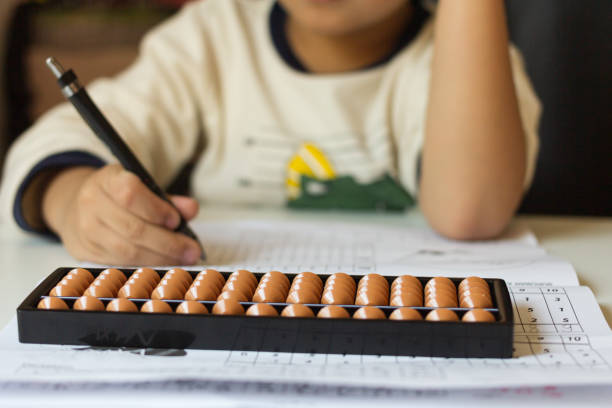
For actual skill-building, I found a soroban learning app. The app provided what I couldn't: infinite patience, immediate non-judgmental feedback, and adaptive difficulty. My daughter practiced 15 minutes daily on the app before homework. This built her skills without building her anxiety.
Element 3: Changed Review Process
Instead of hovering during homework, I reviewed it the next morning—when we were both fresh and not emotional. Wrong answers weren't failures; they were information about what she needed more practice on. I'd note them for future app practice, not for immediate correction and frustration.
Element 4: Emotional Check-ins, Not Academic Check-ins
When homework time ended, I asked 'How did that feel?' not 'How many did you get right?' I celebrated effort: 'You worked on that for the whole 20 minutes—I'm proud of your focus.' I separated my love from her performance completely and explicitly.
| Time | Activity | My Role | Her Experience |
|---|---|---|---|
| 7:30 PM | 15 min learning app practice | Available nearby, not watching | Building skills stress-free |
| 7:45 PM | 20 min independent homework | In another room | Working at her own pace |
| 8:05 PM | Emotional check-in | Asking about feelings, celebrating effort | Feeling supported, not evaluated |
| 8:10 PM | Free time together | Reading, playing, connecting | Positive parent interaction |
The Transformation Over Three Months
The changes didn't happen overnight. The first week, my daughter came to me constantly—partly from habit, partly testing if I'd really changed. I gently redirected her: 'Try one more approach on your own first.' Gradually, she stopped needing me.
Month 1: Breaking Old Patterns
The first month was about unlearning. She was learning to work independently; I was learning to stay away. Her homework wasn't always complete or correct. I had to fight my instinct to intervene. But evenings became peaceful. No more tears. No more raised voices.
Month 2: Building New Confidence
By month two, something shifted. Without me watching, my daughter started taking risks—trying problems she would have given up on before. Sometimes she got them wrong. But sometimes she got them right, and those victories were genuinely hers, not mine-with-her-as-proxy. Her confidence grew because it was grounded in real independent achievement.
Month 3: The New Normal
By month three, our new system felt natural. My daughter's math performance had improved—not dramatically, but steadily. More importantly, her attitude transformed. She no longer dreaded homework. She sometimes even showed enthusiasm about what she'd learned. Our evenings together became pleasant again.
The paradox: By trying less hard to help, I helped more. By being present less, I provided better support. By accepting imperfect homework, I enabled better learning. Sometimes the most effective parenting looks like doing nothing.
The Relationship Recovery
Perhaps the most important change was in our relationship. Before, my daughter had started avoiding me in the evenings. She'd take long bathroom breaks as homework time approached. She'd claim to feel sick. Now, she sought my company again. We read together. We played together. We talked about her day without the shadow of upcoming homework battles.
One evening, about two months into our new system, she crawled into my lap with a book. 'I like evenings now, Mommy,' she said. Such a simple statement, but it nearly made me cry. She'd spent months dreading evenings because of what I thought was 'helping.' Now she liked them again. That's when I knew the change was worth every moment of self-doubt.
FAQ: Questions from Parents in the Same Struggle
Won't my child fall behind if I don't actively help with homework?
Temporary incomplete homework reveals where your child genuinely needs support—valuable information for teachers. Long-term, children who develop independent learning skills outperform those dependent on parental help. A few rough weeks of adjustment leads to years of better outcomes.
What if my child refuses to even try without me there?
Start very small. Ask them to try just one problem independently before coming to you. Gradually increase expectations. Celebrate any independent effort regardless of accuracy. For children with strong dependency, consider external resources (apps, tutors) that can provide support without the parent-child emotional dynamic.
How do I handle my own anxiety about stepping back?
Acknowledge that your anxiety is real and valid—you care about your child's success. Then remind yourself that your current approach isn't working. Trust that appropriate independence builds capability. Focus on the relationship damage that continuing the old pattern would cause. Your feelings of helplessness will fade as you see positive results.
A Message to Parents in the Middle of the Storm
If you're reading this after another tearful homework session—if you're feeling like a terrible parent for losing your patience again—please hear me. The problem isn't that you don't love your child enough. The problem isn't that your child isn't smart enough. The problem is a dynamic that has developed between you, and dynamics can change.
You are not stuck. The nightly battles don't have to continue. Your relationship with your child can heal. It requires the humility to admit your current approach isn't working, and the courage to try something different. That's not failure—that's growth.
My daughter and I both ended up crying over math homework. Now we spend those same evening hours laughing together. The change started the day I decided to stop 'helping' and start truly supporting. Your transformation can start today too.
Ready to end homework tears? Sorokid provides patient, adaptive math instruction that builds skills without the emotional battles—letting you be the supportive parent your child needs.
Start the Transformation