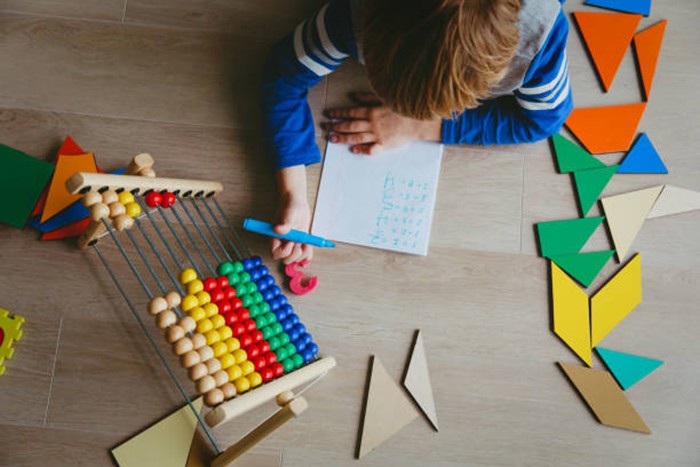
Do Parents Need to Know Soroban to Teach Their Kids? A Clueless Mom's Honest Answer
I spent weeks panicking about learning Soroban before my daughter could start. Eight months later, I still can't use one—and she's thriving. Here's why your ignorance might actually be an advantage.
I remember the exact moment the panic hit me. My colleague had been raving about how her daughter learned mental math through something called 'Soroban'—a Japanese abacus. I went home, Googled it, and within ten minutes I was spiraling. YouTube videos showed tiny fingers flying across beads at impossible speeds. Teachers explained 'friends of 5' and 'complement pairs.' My brain completely shut down. How was I supposed to teach my daughter something I couldn't even understand? Eight months later, I still don't know how to use a Soroban. My daughter Lily can calculate 347 + 589 in her head. And honestly? My cluelessness might be the best thing that happened to her learning.
The Guilt Spiral Every Parent Knows
When I first heard about Soroban, I did what every anxious millennial parent does: I fell into a research rabbit hole. I watched videos for hours. I ordered a physical abacus from Amazon. I even downloaded PDF worksheets.
The abacus arrived. I stared at it. Moved some beads around randomly. Watched another video. Still confused.
My husband found me at 11 PM one night, hunched over the coffee table, trying to figure out how to add 8 + 7 on this thing. 'You know,' he said gently, 'Lily hasn't even started yet.'
He was right. I was so busy preparing to be her teacher that I forgot—maybe I didn't need to be her teacher at all.
The Question That Was Really Holding Me Back
Here's the real question behind 'Do parents need to know Soroban?'
It's not really about Soroban. It's about our fear of failing our kids. Our worry that if we don't understand something, we can't possibly guide them through it. Our guilt that we should be doing more.
I grew up with a mom who could help me with every homework problem through high school. She'd sit with me for hours, explaining algebra, checking my essays. I thought that was what good parenting looked like.
But times have changed. The skills our kids need to learn—coding, digital literacy, new forms of math—often didn't exist when we were in school. We can't be experts in everything. And that's okay.
The question isn't 'Can I teach my child Soroban?' It's 'Can I support my child while they learn Soroban?' Those are two very different things—and the second one is much easier.
What Actually Happened When Lily Started
After weeks of my own failed self-study, I finally just let Lily try the Sorokid app. No preparation. No pre-teaching. I just handed her my iPad and said, 'This is a game for learning math. Want to try it?'
She was curious. Kids always are when something's new.
The app started with the most basic concept: what the beads are. It showed her, let her practice, gave her feedback. No confusion. No overwhelm. Just one tiny step at a time.
Within 20 minutes, she understood something that had taken me hours of YouTube to sort of grasp. Not because she's smarter than me (though she definitely might be), but because the app was designed to teach. I was not.
The Moment I Stopped Worrying
About two weeks in, Lily ran up to me excited. 'Mom! I learned the friends of 10!' She started explaining how when you need to add 8, you subtract 2 and add 10. Something about exchanging beads.
I nodded like I understood. I did not understand.
But here's what I did understand: she was excited. She was learning. She was proud of herself. And she wanted to share it with me.
I realized then that my job wasn't to understand Soroban. My job was to understand HER—to see when she was frustrated, celebrate when she succeeded, and stay consistent with practice time.
Why My Ignorance Actually Helped
Something unexpected happened because I didn't know Soroban: Lily started teaching ME.
Every few days, she'd explain a new concept she learned. 'Okay Mom, so the top bead is worth 5, and the bottom ones are worth 1 each...' She'd move imaginary beads in the air, showing me the process.
I'd ask questions—genuine ones, because I really didn't know. 'What happens when you run out of beads?' 'How do you know which way to move them?'
She'd think, then explain. Sometimes she'd realize she wasn't sure herself, and she'd go back to the app to figure it out.
Research shows that teaching others is one of the most effective ways to solidify learning. It's called the 'protégé effect.' By being genuinely clueless, I accidentally gave Lily the opportunity to be the teacher—which deepened her own understanding.
What I Actually Do Instead of Teaching
Let me break down what my role actually looks like now, eight months into Lily's Soroban journey:
1. I'm the Consistency Police
We practice every day after school, right before snack time. Same time, same place, same routine. Lily knows it's coming. There's no negotiation because it's just what we do—like brushing teeth.
My job is making sure it happens. Not teaching the content. Just protecting the time.
2. I'm the Cheerleader
'You leveled up! That's amazing!' 'Wow, you got 20 in a row correct!' 'Look how fast you're getting!'
I don't understand what she's doing, but I can see the progress numbers. I can see her confidence growing. And I can celebrate that loudly and often.
3. I'm the Curiosity Asker
Instead of explaining things to her, I ask her to explain things to me. 'How did you figure that out so fast?' 'What made that one tricky?' 'Can you show me your thinking?'
These questions help her reflect on her own learning. And they make her feel like the expert—which she is.
4. I'm the Frustration Detector
When her shoulders tense up or she starts sighing, I notice. 'This part seems hard. Want to take a break and come back to it?' Sometimes we stop. Sometimes she pushes through. But she knows I see her.
5. I'm the Real-World Connector
At the grocery store: 'Hey, we have 3 apples and need 7 for the recipe. How many more?' In the car: 'If we drive 20 minutes to Grandma's and 20 minutes back, how long total?'
I can't quiz her on Soroban technique, but I can create opportunities for her to use mental math in real life.
What If My Child Gets Stuck and Asks Me Something?
This was my biggest fear. What happens when Lily hits a wall and I can't help?
It's happened a few times. Here's what I've learned to say:
- •'I don't know! Let's figure it out together.' We replay the lesson. We look at the instructions. We experiment.
- •'Can you show me what you've tried?' Often, walking through her attempts helps her spot the mistake herself.
- •'That sounds tricky. Do you want to skip it and come back tomorrow?' Sometimes frustration just means we're tired.
- •'Why don't you try a few easier ones first, then come back to this?' Building confidence before tackling hard problems.
- •'Let's look at the hint together.' Most good apps have help features. We use them without shame.
Not once has Lily seemed disappointed that I didn't know the answer. She seems more interested in the fact that I'm trying to help.
But Should I Learn Soroban Anyway?
Some parents ask me if they should learn Soroban alongside their kids. My answer: only if you genuinely want to.
There are real benefits to learning together:
- •It models lifelong learning
- •It can be a bonding activity
- •You might find it interesting (some parents do!)
- •You could help with more advanced concepts later
But there are also benefits to NOT learning:
- •Your child gets to be the expert
- •They learn independence
- •You don't burn yourself out
- •You model that it's okay not to know everything
- •You have more energy for support and encouragement
Neither approach is wrong. It depends on your family, your interests, and your bandwidth.
If you do want to learn, don't try to get ahead of your child. Learn alongside them or even slightly behind. Let them stay in the lead—it's great for their confidence.
The Permission Slip You Might Need
If you're reading this article, you might be looking for permission. Permission to start your child on Soroban even though you don't understand it. Permission to not spend your limited free time mastering an ancient calculating tool.
So here it is: You don't need to know Soroban to give your child this gift.
Modern learning tools are designed for independent learning. Your child will have step-by-step instruction, immediate feedback, progress tracking, and adaptive difficulty—things that are honestly better than what most of us could provide anyway.
What your child needs from YOU is something no app can provide: your presence, your encouragement, your belief in them, and your consistency.
Eight Months Later: Where We Are Now
Lily is now doing three-digit addition and subtraction mentally. Her mental math speed has tripled. Her math grades went from B's to A's. More importantly, she actually likes math now.
I still can't use a Soroban. I've accepted this about myself.
But I can tell you exactly what level she's on, what skills she's mastered, and what she's working toward. I know when she's having a good day and when she needs a little extra encouragement. I make sure she practices every single day.
That's my version of helping her with Soroban. And it's enough.
Your child doesn't need a Soroban-expert parent. They need a present, supportive, consistent parent. You already have everything required to help them succeed.
Practical Tips for the Soroban-Clueless Parent
Based on my eight months of figuring this out:
- •Set a consistent practice time. This matters more than anything you could teach.
- •Sit nearby but don't hover. Be present without controlling.
- •Learn the progress metrics. Understand levels, streaks, accuracy rates—even if you don't understand the content.
- •Celebrate specific achievements. 'You got 18 out of 20!' is better than 'Good job.'
- •Ask questions, don't give answers. 'What do you think?' is powerful.
- •Embrace 'I don't know.' It's a complete sentence and a learning opportunity.
- •Create real-world math moments. Shopping, cooking, driving—math is everywhere.
- •Connect with other parents. Online groups can help when you need advice.
- •Trust the process. Progress isn't always linear. Keep going.
No Soroban knowledge required—really. The Sorokid app teaches your child everything they need while you focus on what you do best: being their biggest supporter.
Start Your Child's Free Trial